

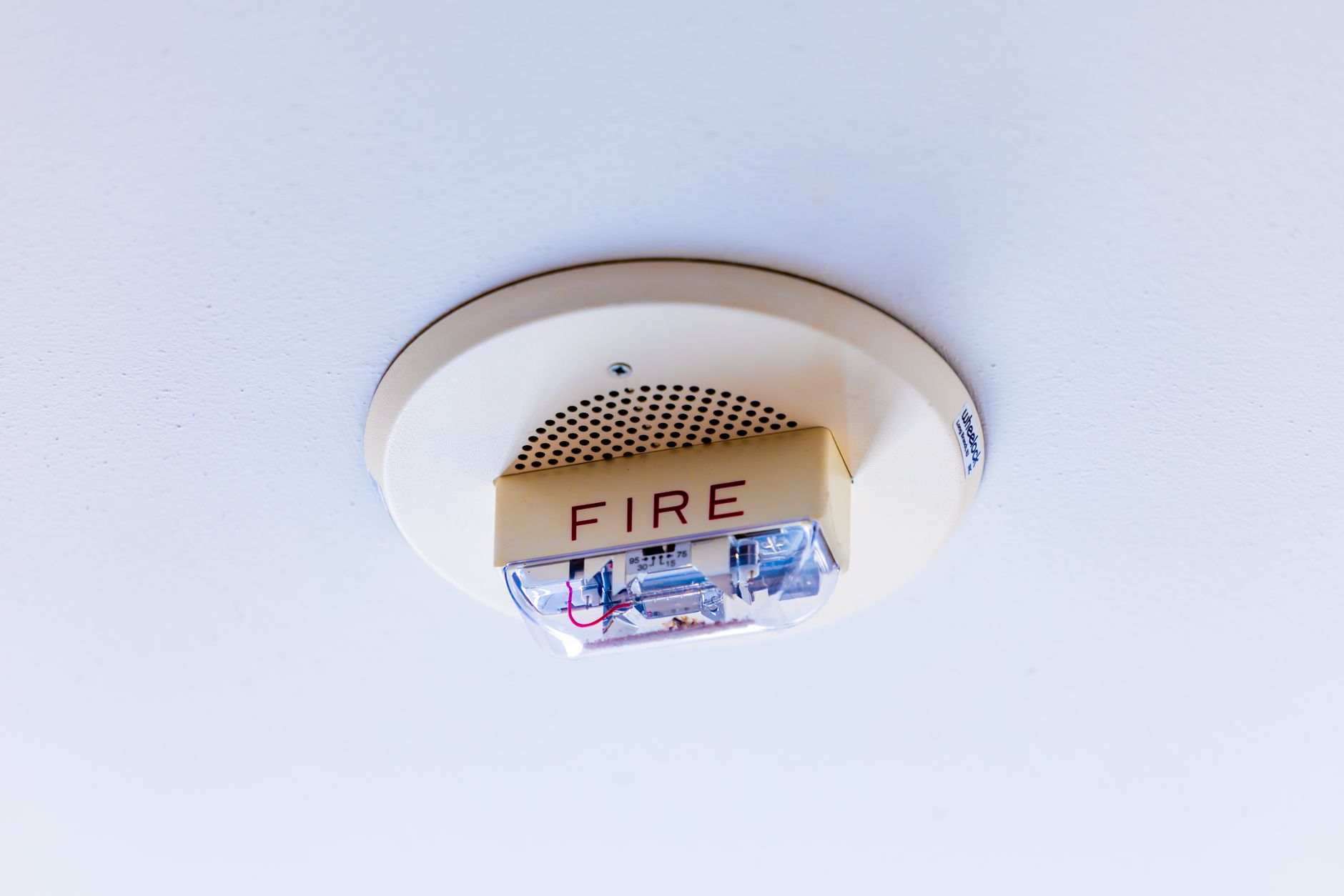
Professional fire alarm systems in Houston, TX typically cost $1,000 to $5,000 for a small commercial space and $500 to $2,500 for a home, plus $25 to $75 per month for 24/7 monitoring. Installation must comply with NFPA 72 and the City of Houston Fire Code, and only a licensed alarm company should design and connect the system. This guide explains what a code-compliant system includes, what it costs, and how to pick the right installer for your Houston property.
What is a fire alarm system and how does it work?
A fire alarm system is a network of connected devices that detect smoke, heat, or flame and alert building occupants and a monitoring center so people can evacuate and the fire department can respond quickly. At the core is a control panel that continuously supervises every device on the circuit. When a smoke detector or heat detector trips, the panel activates audible and visual notification devices — horns and strobes — and, if the system is monitored, transmits a signal to a central station.
Modern systems in Houston combine several device types:
- Smoke detectors (photoelectric, ionization, or dual-sensor)
- Heat detectors for kitchens, garages, and mechanical rooms where smoke sensors would false-alarm
- Manual pull stations required near exits in commercial buildings
- Notification appliances (horn/strobes) sized to local sound and visibility codes
- Monitoring communicators using cellular or IP paths
The National Fire Protection Association sets the installation standard, NFPA 72, that Houston enforces. A properly engineered fire alarm system supervises its own wiring, so a cut or fault triggers a trouble signal instead of silently failing — a critical difference from off-the-shelf smoke alarms.
Who installs fire alarm systems in Houston, TX?
Licensed alarm companies install fire alarm systems in Houston, TX — not general electricians or handymen. Texas requires a Fire Alarm Certificate of Registration from the State Fire Marshal’s Office for any firm designing, installing, or servicing fire alarm equipment, plus licensed individual technicians on each job. Always ask for the license number before signing anything.
Beyond the state license, a qualified Houston installer should:
- Pull permits with the Houston Fire Department and schedule the required inspection
- Provide stamped drawings for commercial systems
- Test every device at commissioning and give you documentation
- Offer ongoing inspection and maintenance to keep the system compliant
Questions to ask before hiring
1. What is your Texas fire alarm registration number?
2. Do you handle the permit and city inspection?
3. Is monitoring in-house or subcontracted to a national wholesale station?
4. Do I own the equipment, and am I locked into a long contract?
Many national brands lock customers into multi-year agreements and route monitoring through out-of-state wholesale stations. A local Houston company can dispatch a technician faster and knows the specific requirements local inspectors enforce, which reduces failed inspections and repeat visits.
How much do fire alarm systems in Houston, TX cost?
Expect to pay $500 to $2,500 for a residential fire alarm system and $1,000 to $8,000 for a small-to-mid commercial installation, plus $25 to $75 per month for professional monitoring. The wide range reflects building size, device count, and whether new wiring is required.
Cost breakdown by factor
- Control panel: $300–$1,500 depending on zone capacity
- Detectors and pull stations: $40–$150 each, installed
- Horn/strobe notification devices: $60–$200 each
- Cellular/IP communicator: $150–$400
- Labor and permitting: varies by square footage and building complexity
Commercial buildings usually need more devices, engineered drawings, and inspection fees, which raises the total. According to the U.S. Fire Administration, working detection dramatically improves survival odds, so under-buying to save money is a poor trade-off. Some Houston installers offer $0-down financing that spreads the equipment cost across monthly payments, which keeps upfront cost low without a long-term monitoring contract. Ask whether monitoring is billed month-to-month so you are not locked in if you sell or relocate.
What does Houston fire code require for alarm systems?
Houston enforces the International Fire Code and NFPA 72, and requirements depend on occupancy type, building size, and use. Single-family homes need working smoke alarms in each bedroom, outside sleeping areas, and on every level. Commercial buildings, apartments, schools, and assembly spaces face far stricter rules — including monitored panels, pull stations, and audible/visible notification throughout.
Key Houston-area requirements often include:
- Monitored systems for most commercial and multi-family occupancies
- Permit and inspection by the Houston Fire Department before occupancy
- Annual testing and documented inspection records
- Fire alarm/sprinkler coordination in buildings with suppression systems
The International Code Council publishes the model codes Houston adopts. Because interpretations vary by inspector and building type, a local installer who works with Houston inspectors regularly is worth the premium — they know which drawings, device spacing, and sound levels will pass on the first inspection. Getting this wrong means failed inspections, delayed occupancy, and costly rework, especially for tenant build-outs and new commercial spaces on a construction schedule.
Do fire alarm systems in Houston need professional monitoring?
Most commercial fire alarm systems in Houston are legally required to be monitored, and monitoring is strongly recommended for homes too. Monitoring means a central station receives the alarm signal 24/7 and dispatches the fire department even when nobody is on-site — critical for businesses after hours and for homes when you’re away or asleep.
What monitoring adds
- 24/7 central-station response with fire department dispatch
- Supervisory alerts for system faults, low battery, and communication loss
- Documentation many insurers and code officials require
Unmonitored detectors only make noise locally. If no one hears them, the fire spreads unchecked. Monitoring typically runs $25 to $75 per month depending on the number of signal points and whether it bundles intrusion or video. Look for a provider offering month-to-month monitoring with no long-term contract so you keep control. You can review monitoring and alarm services directly with a local provider to see what coverage and pricing fit your building.
Why do competitors rank for fire alarm systems in Houston, TX?
Many companies rank for fire alarm systems in Houston, TX simply because they name the city plainly in their titles and headings and list clear service categories — not because their systems are better. Search engines reward pages that state the service and location directly, so a page titled with the exact service and city often outranks a stronger local installer whose site leads with promotions instead of plain service language.
What matters more than search ranking
- Response time: a local team can reach your property faster than a national chain routing through an out-of-state office
- Equipment ownership: confirm you own the panel and detectors outright
- Contract flexibility: month-to-month monitoring beats a locked 36-month agreement
- Local code knowledge: installers who work with Houston inspectors pass inspections faster
When you compare providers, weigh licensing, in-house monitoring, and contract terms — not just which name appeared first in a search. A locally staffed company that offers no-contract monitoring, $0-down financing, and hardwired professional installation frequently delivers more value than a big brand that markets heavily but subcontracts the actual service and monitoring.
How long does fire alarm installation take?
A residential fire alarm installation usually takes half a day to a full day, while commercial installations run from a few days to several weeks depending on building size, wiring, and permitting. New-construction and tenant build-outs take longer because they involve engineered drawings, coordination with electricians, and a scheduled city inspection.
Typical timeline
1. Site survey and design — 1 to 3 days
2. Permit approval — varies with Houston Fire Department workload
3. Device installation and wiring — hours to weeks by scope
4. Commissioning and testing — every device verified
5. Final inspection — scheduled with the city
Hardwired systems take longer to install than wireless but are more reliable long-term because they don’t depend on battery-powered sensor links. For occupied buildings, a good installer phases the work to minimize disruption. Ask your installer for a written schedule up front, and confirm they’ll handle the inspection appointment — coordinating that is where DIY and unlicensed installs commonly stall.
What’s the difference between residential and commercial fire alarms?
Residential fire alarms focus on early warning to wake and evacuate occupants, while commercial fire alarm systems must protect larger, higher-occupancy buildings with engineered device layouts, pull stations, and mandatory monitoring. The core detection technology overlaps, but code requirements and complexity diverge sharply.
Residential systems
- Interconnected smoke and heat detectors
- Optional monitoring for dispatch when you’re away
- Often integrated with a smart security panel
Commercial systems
- Addressable panels that identify the exact device in alarm
- Manual pull stations at exits
- Notification appliances sized to occupancy load
- Required monitoring and annual inspection documentation
Commercial buildings frequently tie the fire alarm into access control, so doors unlock and elevators recall automatically during an alarm. Warehouses, offices, and retail spaces each carry different device-spacing rules. Because commercial fire alarm systems in Houston, TX must pass stricter inspection, hiring an installer experienced with both residential and commercial work — and with local commercial code — protects you from expensive redesigns after a failed inspection.
How do you choose the right fire alarm installer in Houston?
Choose a Houston fire alarm installer based on state licensing, in-house monitoring, contract flexibility, and local track record — in that order. Start by verifying the Texas Fire Alarm Certificate of Registration, then confirm the company pulls permits, handles inspection, and provides written test documentation.
A practical checklist
- Valid Texas fire alarm registration and licensed technicians
- Handles permits and Houston Fire Department inspection
- 24/7 professional monitoring, ideally in-house
- Month-to-month or no-contract monitoring options
- You own the equipment outright
- Local presence for fast service calls
- Financing available if you’d rather spread the cost
Electronic Protection Systems is one Houston-area provider that installs residential and commercial fire alarm systems with 24/7 professional monitoring, $0-down financing, hardwired installation, and no long-term contracts, serving both Houston, TX and Lafayette, LA. Whichever installer you choose, prioritize licensing and flexible terms over the biggest advertising budget — a compliant, well-monitored system that you own is the outcome that actually protects your property and the people in it.