

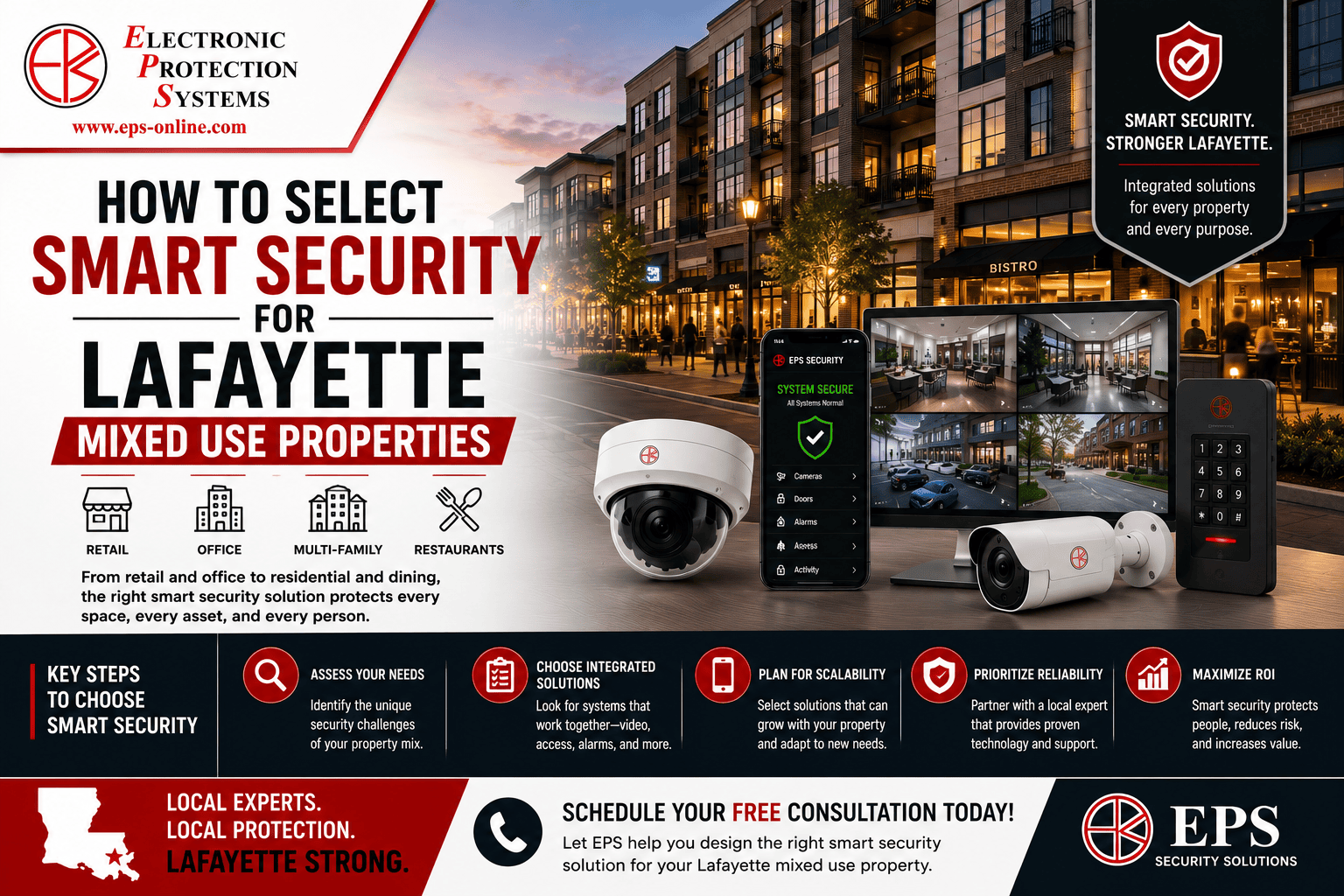
Smarter Security Strategies for Lafayette Mixed-Use Spaces
Mixed-use buildings in Lafayette work hard all day and late into the night. You might have shops and restaurants on the first floor, offices a level up, and apartments on top of all that, plus parking areas wrapped around everything. With that much going on in one property, basic locks and a few stand-alone cameras cannot keep up.
That is where computerized security systems come in. Instead of separate alarms, cameras, and fire systems that do not talk to each other, a smart platform ties it all together. Alarms, access control, video, and fire protection work as one system that you can see and manage from one screen.
Late June is when that really matters in south Louisiana. Shops extend their hours, patios stay full, and more visitors move through your lobbies and parking lots. As summer activity ramps up, it is a smart time to step back and ask, “Is our building really protected the way it should be?”
Unique Security Challenges in Lafayette Mixed-Use Buildings
Mixed-use means mixed risks. A single building has to deal with very different problems at the same time.
On a normal day you might see:
- Retail dealing with shoplifting, cash handling, and after-hours break-ins
- Restaurants facing kitchen fire hazards and late-night closing routines
- Offices guarding computers, documents, and data rooms
- Residents needing safe parking, elevators, hallways, and mail areas
On top of that, you have a lot of people who all need different levels of access. That often includes:
- Tenants and residents
- Store and restaurant employees
- Office staff and managers
- Cleaning crews and maintenance techs
- Delivery drivers and contractors
Each group should only get into the spaces and at the times that make sense. Customers should not reach storage rooms. Residents should not wander into office suites after hours. Delivery drivers should not have open access to every hallway.
Local life adds a few more challenges. Evening events, live music, and late-night traffic can bring crowds to nearby streets and parking lots. Summer storms can knock out power or internet for short periods. Visitor counts rise around holidays and local festivals. All of this raises the chance of both honest confusion and real security problems.
What Modern Computerized Security Systems Can Actually Do
Modern computerized security systems pull everything together in one place. Instead of juggling multiple logins and panels, you get a single management platform that links
- Video surveillance
- Access control for doors and gates
- Intrusion detection and burglar alarms
- Fire alarm and life safety signals
Property managers can view cameras, open a door, change a user’s access, or review alarm events from a desktop at the office, or a phone or tablet while off-site.
Smarter features make daily life easier and safer, such as:
- Event-based video recording that bookmarks motion, door activity, or alarms
- License plate recognition in parking areas to track repeat visitors or flagged vehicles
- Elevator and door control that follows schedules or card, fob, or mobile credentials
- Panic buttons in lobbies, offices, or back rooms that trigger instant alerts
UL-listed 24/7 monitoring adds another layer of protection. Trained operators watch for alarm events, verify what is happening using signals and video, and coordinate with local emergency services. For a Lafayette and Acadiana property, that means real people responding around the clock, not just an app notification.
Designing Zoned Protection for Shared Commercial and Residential Areas
The key to a mixed-use property is zoning. With zoning, you can treat each part of the building like its own “mini site” inside one big system. The retail spaces, restaurant, offices, and apartments can all follow different rules without running separate systems.
For example, the platform can control:
- Which doors unlock during store hours
- Which floors a residential fob or mobile credential can reach in the elevator
- Which alarms are active while restaurants clean up after closing
- Who gets alerts when something goes wrong in a specific area
Lobby and elevator control are especially important. Good setups often do the following:
- Keep the main lobby open and welcoming but watched by cameras
- Use key fobs, mobile credentials, or PINs so only residents reach apartment floors
- Lock office floors after business hours while still letting cleaning crews in on a schedule
Back-of-house areas need just as much thought. Storage rooms, IT closets, roof hatches, loading docks, and trash or dumpster areas can all be sensitive spots. Cameras, door contacts, and controlled access reduce theft, protect building systems, and lower liability around slips, trips, and late-night activity in those hidden corners.
Balancing Tenant Convenience, Code Compliance, and Budget
Security is not helpful if people hate using it. In mixed-use buildings, you have residents who want simple daily routines and business tenants who want quick, reliable access for their staff.
User-friendly features make a big difference, like:
- Mobile apps that let residents or managers open doors or gates without hunting for keys
- Readers that clearly show if a card or fob worked, so no one is stuck guessing
- Visitor management tools that keep short-term guests moving smoothly
- Clear rules for what happens if someone loses a key, card, or phone
Life safety and code compliance always come first. Fire alarm systems need to follow NFPA standards, and doors must allow safe egress during an emergency. Your computerized security system should work with fire doors, emergency lighting, and exit routes, not fight against them. That means doors might unlock during a fire alarm, and the system must be designed to handle that safely.
For Lafayette owners, flexible options such as $0 down installation and lifetime warranty choices can make a modern system easier to approve. Scalable designs let you start with core protection, then add more cameras, doors, or features as your building fills up or your needs grow over time.
Seasonal Readiness and Long-Term Value for Lafayette Properties
Summer brings its own patterns to mixed-use spaces. You see more evening events, patio seating at restaurants, and heavier parking lot use. Many properties also bring on seasonal staff who need short-term access credentials that can be turned off right on schedule.
Computerized security systems help you stay ahead by:
- Automating holiday and weekend schedules for doors and gates
- Adjusting lighting and access times for events without daily reprogramming
- Setting temporary access for seasonal employees that expires on its own
Storm season deserves special attention. A well-designed system can include backup communication paths, battery backup for critical panels, and remote access tools so managers can check in even if they are away from the property. Priority monitoring and smart alerts help guard against break-ins or fire risks when the lights are out and the building is quieter than usual.
When you pull it all together, a strong, integrated security and life safety setup does more than stop trouble. It protects revenue, supports your tenants, and makes your Lafayette mixed-use building a place where people feel safe living, working, and visiting, day and night.
Protect Your Facility With Smarter Security Today
If you are ready to upgrade, we can design and install computerized security systems tailored to your building, staff, and compliance needs. Our team at Electronic Protection Systems will review your current vulnerabilities, recommend practical improvements, and handle a streamlined installation process. Reach out to schedule a consultation so we can help you modernize your protection before the next incident puts your operations at risk.